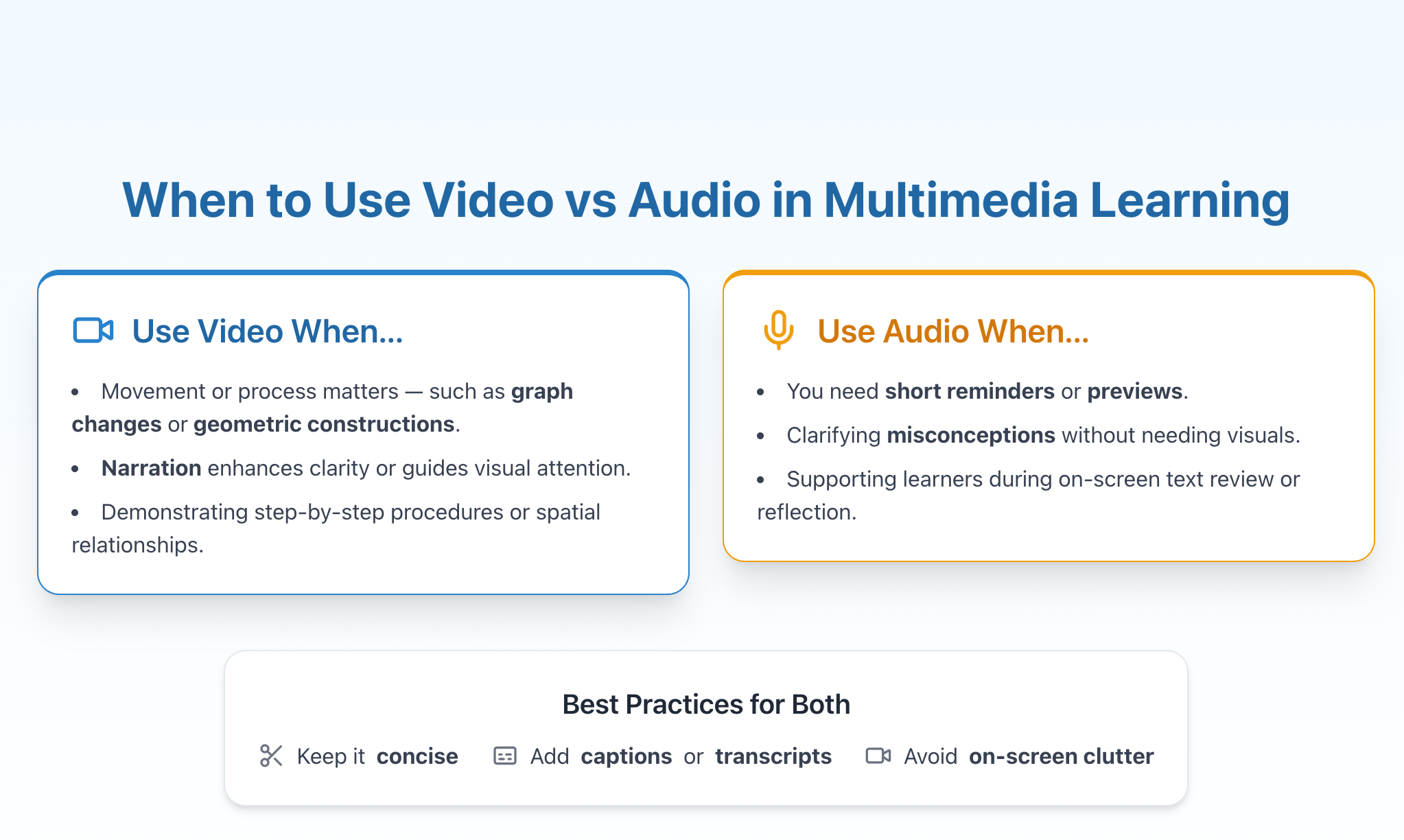
When to Use What — Simple Cheat Sheet
Use this quick guide to decide whether a concept is better suited for video or audio—both in this mini-module and in your own teaching.
- Choose video when something moves or changes on screen: graph transformations, geometric constructions, step-by-step algebra reveals.
- Choose audio when students just need guidance or reminders: homework previews, expectations for tomorrow, quick misconception fixes.
- Keep both short: video around 2–4 minutes; audio around 45–90 seconds.
- Always support access: captions for video; transcripts for audio.
When to Use What — Principles in Plain English
This site intentionally uses video when movement matters—such as graph changes and worked examples— and audio when quick guidance is sufficient, like homework previews or short misconception fixes.
Use video when movement matters
Graph changes, geometric constructions, or step-by-step reveals benefit from brief narrated video (2–4 minutes). Keep text on the screen minimal, make key values large and readable, and synchronize narration to each visual change.
Use audio for quick guidance
Previews, reminders, or misconception fixes work well in 45–90 seconds. Provide a clear call to action (what students should do next) and a transcript so all learners can access the message.
Three guardrails: keep it short, script lightly, and remove on-screen clutter.
Infographic: Video vs. Audio — Quick Decision Guide
The visual below summarizes the patterns from this page. Use it as a mental model as you plan lessons: start with the kind of thinking students need to do, then pick video or audio accordingly.